01.09.2026
Welcome to Dog Parenthood: Your House Now Belongs to Someone With Paws
Bringing home a new dog is one of the most exciting, heart-melting, “why is there already fur on everything?” moments of your life. Whether you are welcoming a brand-new puppy or adopting an adult dog, those first few days can feel like a mix of joy, chaos, cuddles, zoomies, and a sudden realization that you now own more dog supplies than human groceries.
This new dog parent guide is here to help you survive the first few weeks with confidence. Think of it as your practical, pup-approved roadmap for what to buy, how to prepare your home, what routines to build, and how to keep training positive from day one. Because yes, your new best friend needs a bed, bowls, a leash, and toys. But what they really need is structure, patience, consistency, and a whole lot of love. A few great treats do not hurt either. 😉
The New Dog Checklist: What to Buy Before Your Dog Comes Home
Before your new dog arrives, set yourself up for success with the essentials. You do not need to buy every dog product on the internet, but you do need the basics that help your pup feel safe, fed, clean, and ready to learn.
Here is a simple new dog checklist to start with:
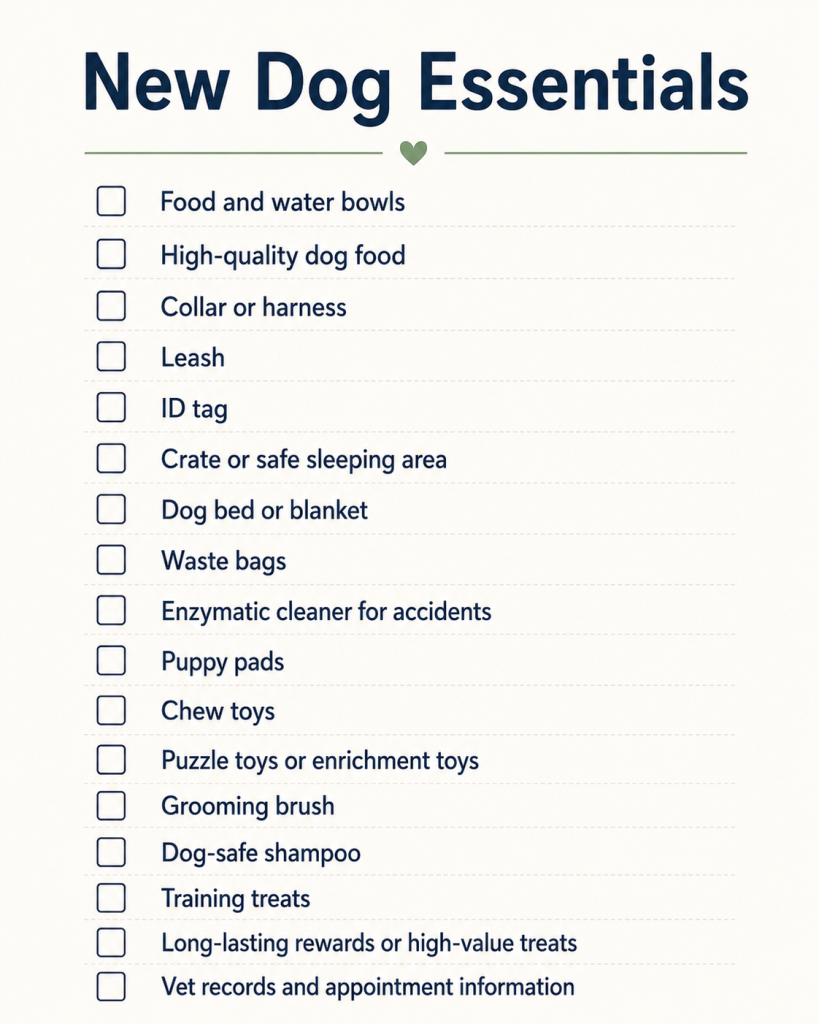
✨ Pro tip: Keep it simple at first. Your dog does not need a wardrobe, a toy box that rivals a preschool classroom, or six different beds. Start with the essentials, learn your dog’s preferences, then build from there.
Step One: Create a Safe “Landing Zone”
Your new dog is walking into a world that smells, sounds, and feels completely unfamiliar. Even if they seem excited, this transition is a lot for them. Before they come home, create a calm space where they can decompress.
This might be a crate, pen, gated room, or cozy corner with a bed and water bowl. Keep it quiet, comfortable, and away from heavy foot traffic.
For puppies, this space helps with potty training, naps, and preventing too much freedom too soon. For newly adopted adult dogs, it gives them a predictable place to settle while they learn that your home is now their home too.
Add a few safe chew toys, but avoid overwhelming them with every toy you bought.
✨ New dog parent rule number one: less chaos, more calm.
Step Two: Puppy-Proof Like You Mean It
If you are bringing home a puppy, assume they will try to taste everything. Shoes, cords, rugs, table legs, mystery crumbs, mail, your favorite throw pillow… all fair game.
If you are bringing home an adult dog, still puppy-proof. Even older dogs can get curious, anxious, or confused in a new environment.
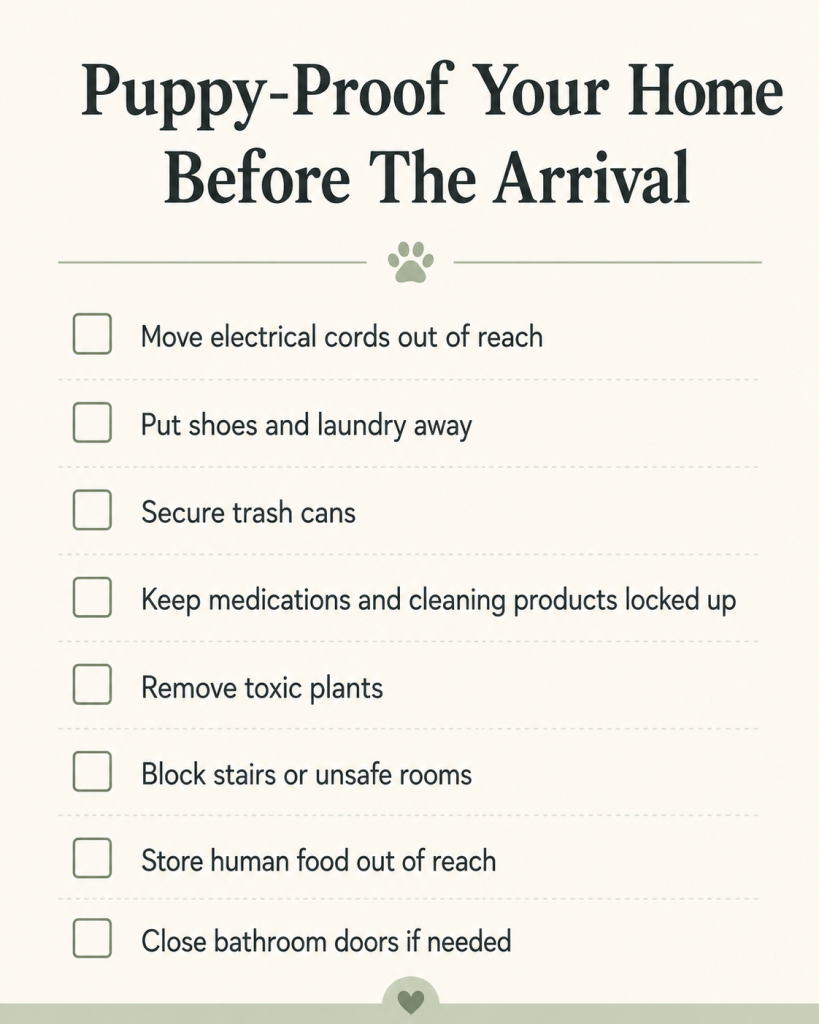
A safe space reduces stress for your dog and saves you from saying, “What do you have in your mouth?” 47 times in one afternoon.
Step Three: Choose a Food Routine That Makes Life Easier
Food is one of the biggest decisions new dog parents make. It impacts energy, digestion, training, routine, and how excited your dog gets when they hear the bag open from three rooms away.
When looking for the best dog food for new dog owners, convenience matters. Quality matters. Ingredients matter. And your dog’s willingness to actually eat it definitely matters.
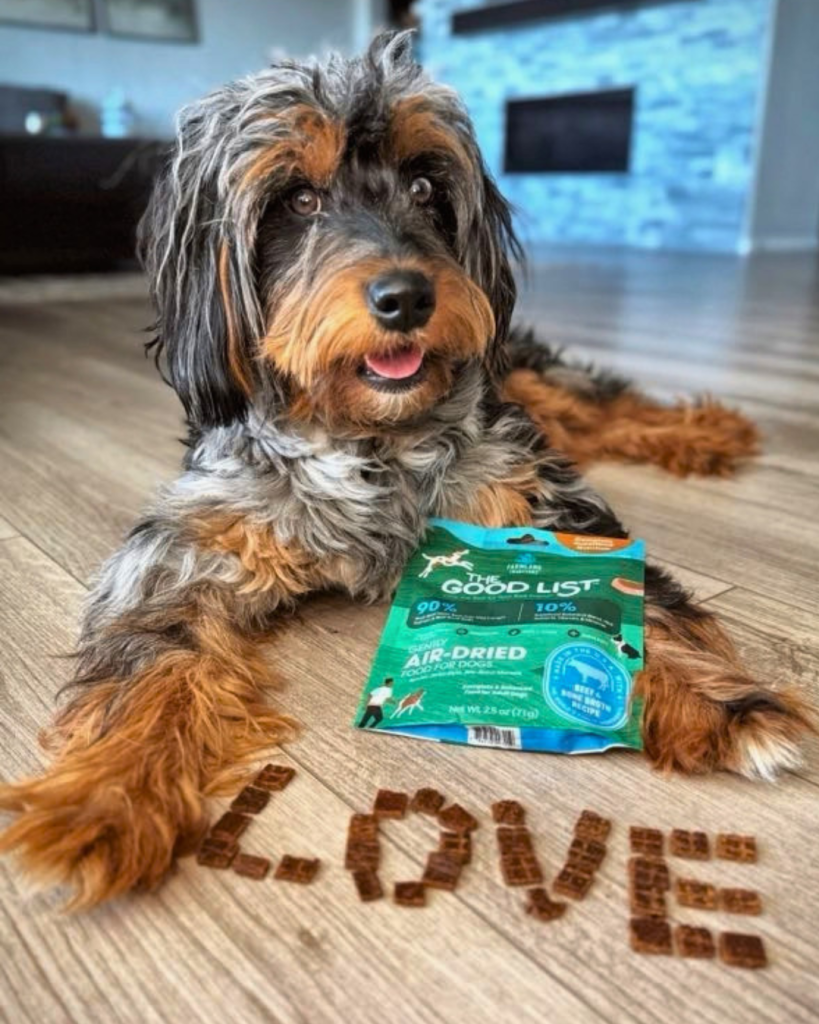
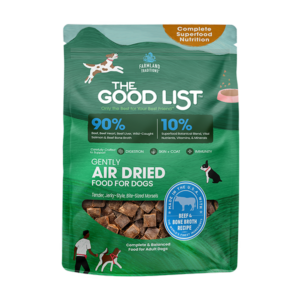
This is where The Good List from Farmland Traditions can fit naturally into a new dog parent’s routine. The Good List is an air-dried dog food crafted with a 90% animal protein blend and 10% superfoods and essential nutrients. The air-drying process creates tender morsels that support digestive health, immune strength, and skin and coat health.
The Good List is especially helpful because it is versatile. It can be served as:
- A complete meal for adult dogs
- A topper
- A mix-in
- A treat
- A trainer
✨ A quick note for puppy parents: The Good List is complete and balanced for adult dogs. If you are bringing home a puppy, talk with your veterinarian about the right puppy-specific diet for their age, breed size, and growth needs before using any adult dog food as their main meal.
Shop The Good List on Amazon
Step Four: Make Training Feel Like a Game
Training should start early, but it does not need to feel intense. The first few weeks are about teaching your dog that good things happen when they check in with you.
Start with simple basics:
- Name recognition
- Sit
- Come
- Touch
- Crate comfort
- Potty routine
- Leash manners
- “Leave it”
- Calm settling
✨ The secret? Keep training sessions short, positive, and rewarding.
For new puppies, aim for tiny sessions throughout the day. For newly adopted adult dogs, go slow and build trust. Your dog may not know your cues yet, but they are learning your tone, body language, routine, and snack distribution policies.
This is where dog training treats become essential. The right reward can turn “why would I listen to you?” into “I am suddenly an obedience scholar.”
Step Five: Use High-Value Treats Strategically
Not all treats have the same motivational power. Some are casual “good job” treats. Others are high-value dog treats – the ones your dog would politely write a thank-you note for if they had thumbs.
High-value treats are especially useful for:
- Recall training
- Leash training
- Learning new cues
- Working around distractions
- Crate training
- Vet handling practice
- Grooming practice
- Confidence building
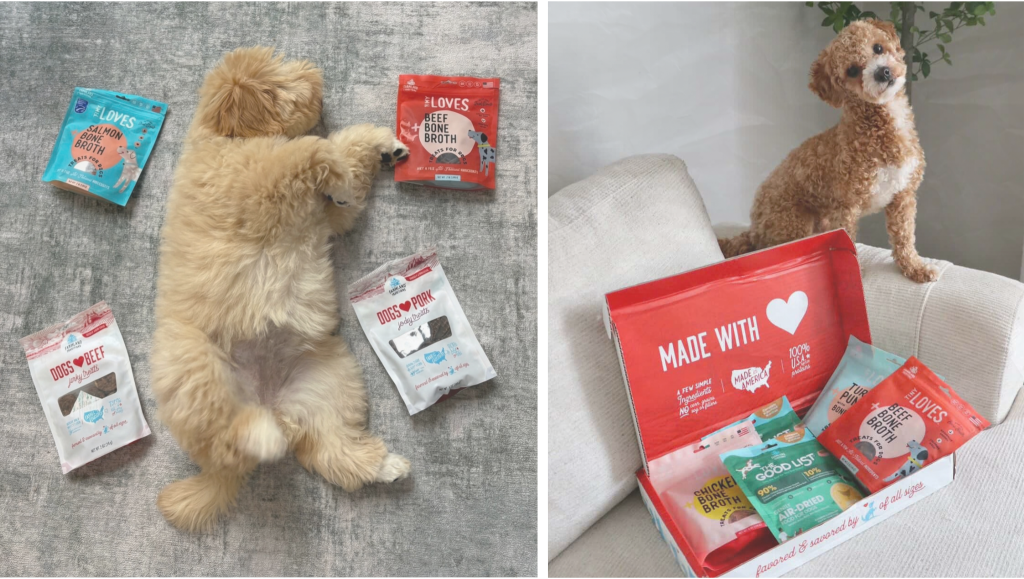
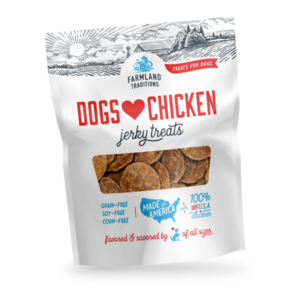
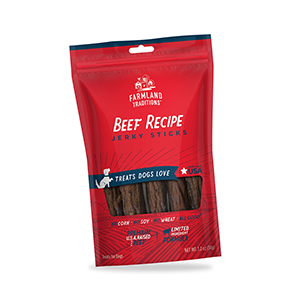
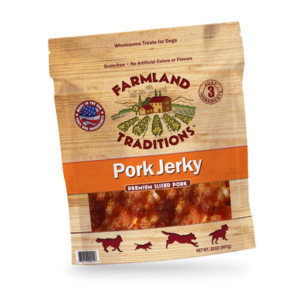
Dogs Love Jerky is a perfect high-value treat sourced and made in the USA with limited ingredients and rich in savory protein. They are soft enough to break into smaller pieces for smaller dogs.
Shop Dogs Love Jerky on Amazon
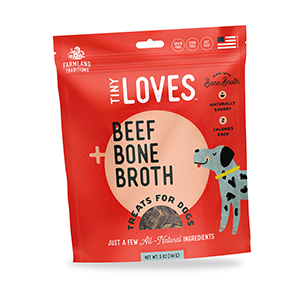
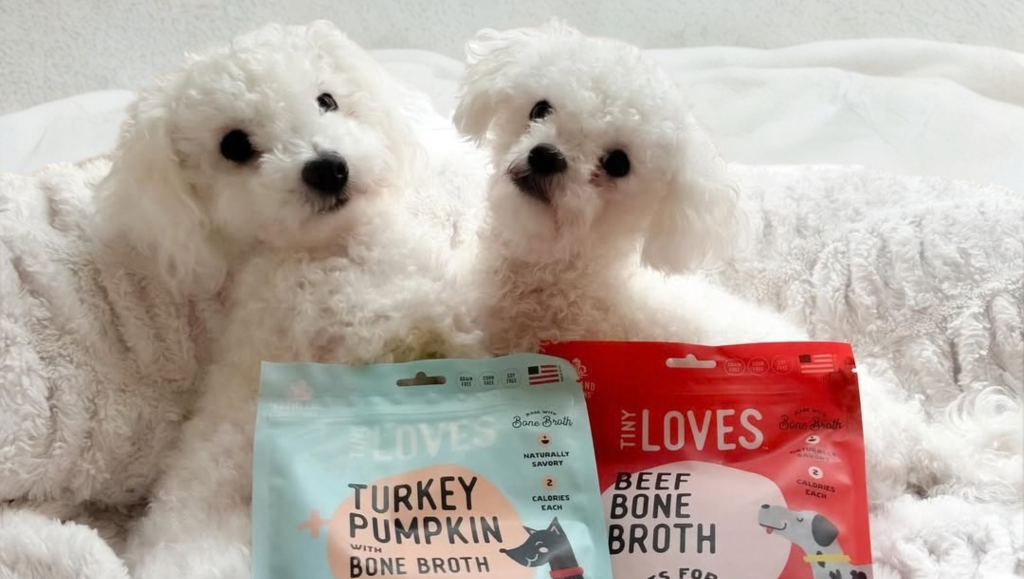
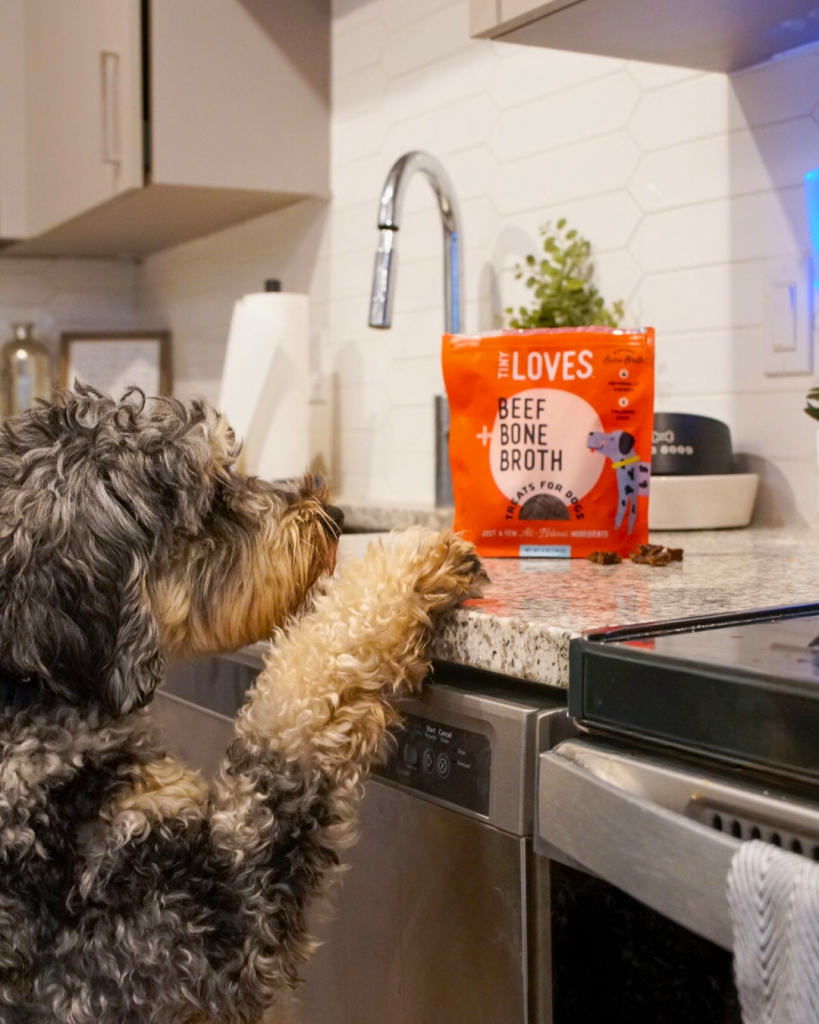
For more frequent rewards, Tiny Loves is another helpful option made with bone broth and only 2 calories per treat! They are ideal for treating, training, or topping.
Shop Tiny Loves on Amazon
Step Six: Build a Routine Before You Need One
Dogs thrive on predictability. A consistent routine helps them understand when it is time to eat, potty, rest, train, play, and settle.
A simple daily rhythm might look like:
Morning: potty break, breakfast, short walk, training
Midday: potty break, enrichment toy, nap
Afternoon: walk, play, training
Evening: dinner, calm enrichment, final potty break
Night: bedtime routine
For puppies, potty breaks will need to happen more frequently. Many puppy guides recommend taking puppies out after waking, eating, playing, and before bedtime. For newly adopted adult dogs, routines are just as important. Even if they are house-trained, they may need time to understand your home, schedule, and expectations.
The goal is not perfection. The goal is predictability.
Step Seven: Expect Accidents, Big Feelings, and Weird Little Habits
The first few weeks can be messy. Your new dog might bark at their reflection, refuse to walk past a trash can, fall asleep in the food bowl, or decide that 2:00 a.m. is the perfect time to test their vocal range. This is normal.
New dogs need time to decompress. Puppies are babies. Adopted dogs may be adjusting to a major life change. Give them patience, structure, and gentle guidance.
When in doubt, ask yourself:
- Are they tired?
- Do they need to potty?
- Are they overstimulated?
- Are they hungry?
- Are they unsure what I want?
- Do they need a break?
Your dog is not trying to be “bad.” They are learning how to live in your world.
Step Eight: Stock Your Training Station
One of the best first-time dog owner tips is to keep rewards nearby. If treats are always in a cabinet across the room, you may miss the chance to reward good behavior in the moment.
Set up a few “training stations” around the house with:
- A treat pouch
- Tiny Loves for small rewards
- Dogs Love Jerky for higher-value moments
- Waste bags near the door
- A leash by the exit
- A towel for muddy paws
- A chew toy for redirection
Reward the behavior you want to see again. Your dog is constantly learning. Make sure they are learning the good stuff.
Step Nine: Make Mealtime More Than Just a Bowl
Mealtime can be a bonding tool, training tool, and enrichment opportunity. Instead of always serving food in a bowl, try switching things up.
You can use The Good List as:
- A complete meal for adult dogs
- A meal topper for added excitement on top of kibble
- A mix-in with fresh food to upgrade mealtime
- A training reward during short sessions
- A treat for enrichment games
Because it has a soft, jerky-style texture, The Good List feels more exciting than standard hard kibble and is designed for convenience and nutrition.
Step Ten: Do Not Forget the Vet
Schedule a vet visit soon after bringing your new dog home. This helps establish care, review vaccines, discuss parasite prevention, confirm diet recommendations, and ask any questions specific to your dog’s age, breed, size, or health history.
For puppies, vet visits may happen more frequently during the vaccination period. For adult dogs, an initial wellness exam helps you start with a clear baseline. Bring any adoption, breeder, or shelter records with you.
Questions to ask your vet:
- What food is best for my dog’s age and size?
- How much should I feed each day?
- What vaccines or boosters are needed?
- When should we start flea, tick, and heartworm prevention?
- What signs of stress or stomach upset should I watch for?
- Are there any breed-specific concerns?
You Do Not Have to Be Perfect – Just Consistent
Becoming a new dog parent is not about getting everything right on day one. It is about building trust, creating routines, learning your dog’s personality, and celebrating progress. Little by little, your dog will learn your rhythm. You will learn their signals. And together, you will build the kind of bond that turns ordinary routines into traditions.
Start with the basics. Keep training positive. Choose food and treats you feel good about.